
Choosing the Right Guard House for Your Facility
To choose the right guard house, evaluate your perimeter security vulnerabilities, personnel safety needs, and traffic volume. Select durable steel or modular structures that install rapidly, offer clear 360-degree visibility, and integrate smoothly with your existing access control systems while remaining fully relocatable.
The Core Security Challenge of Facility Access Control
You manage a busy distribution center, an industrial plant, or a corporate campus, and you know that the front gate is your first line of defense. Keeping unauthorized vehicles out and tracking visitors requires a dedicated space where your security team can work without distraction. When you place a proper guard house at your perimeter, you establish a physical anchor for your access control policy. Without a secure, climate-controlled vantage point, officers face fatigue, miss critical details, and struggle to manage bad weather while checking credentials.
Identifying vulnerability points
Every facility perimeter has specific weak spots where people attempt to bypass standard check-in procedures. Common access vulnerabilities include:
- Unmonitored service gates left open during shift changes
- Blind spots near curving entry lanes that block a security officer's direct view
- Inadequate lighting around card readers and visitor check-in kiosks
- Vulnerable exterior entry doors that lack reinforced locking mechanisms or impact resistance
If you fail to address these gaps, you invite trespassing, theft, and liability issues. A well-placed security structure covers these angles, forcing all traffic through a single, controlled bottleneck.
Evaluating personnel safety requirements
Your security officers cannot perform at their best if they are freezing in the winter, baking in the summer, or exposed to external hazards. Protecting your staff starts with providing a structurally sound interior that dampens outside noise and resists potential physical threats. You must look at safety through two lenses: physical protection against vehicle impacts or forced entry, and occupational health protection against extreme temperatures and poor air quality. When you invest in a proper shelter, you reduce turnover among security staff and ensure they remain alert throughout long shifts.
Why Traditional On-Site Construction Falls Short
Building a permanent brick-and-mortar security booth from the ground up often sounds like a solid plan, but it rarely makes financial or operational sense. Traditional construction introduces months of mess, contractor scheduling conflicts, and regulatory hurdles right at your busiest entrance. You end up disrupting daily traffic flow just to pour concrete and frame walls in the middle of your access road.
Time delays and cost overruns
Stick-built projects are notoriously difficult to budget and schedule accurately. Weather delays, material shortages, and labor disputes can stretch a four-week project into a four-month ordeal. Every week your entrance is blocked by construction equipment is a week your facility operates at a higher risk. Prefabricated solutions eliminate this unpredictability because they arrive fully built, letting you bypass the financial bleeding of open-ended construction contracts.
Durability and mobility limitations
Once you pour a concrete foundation and build a permanent masonry room, you are locked into that exact spot forever. If your facility expands, your traffic patterns shift, or you decide to sell the property, that expensive structure cannot move with you. Traditional buildings also suffer from settling cracks, roof leaks around flashing points, and high maintenance costs over time. We prefer solutions that adapt to your business life cycle rather than trapping you in one physical footprint.
Evaluating Modular and Portable Security Structures
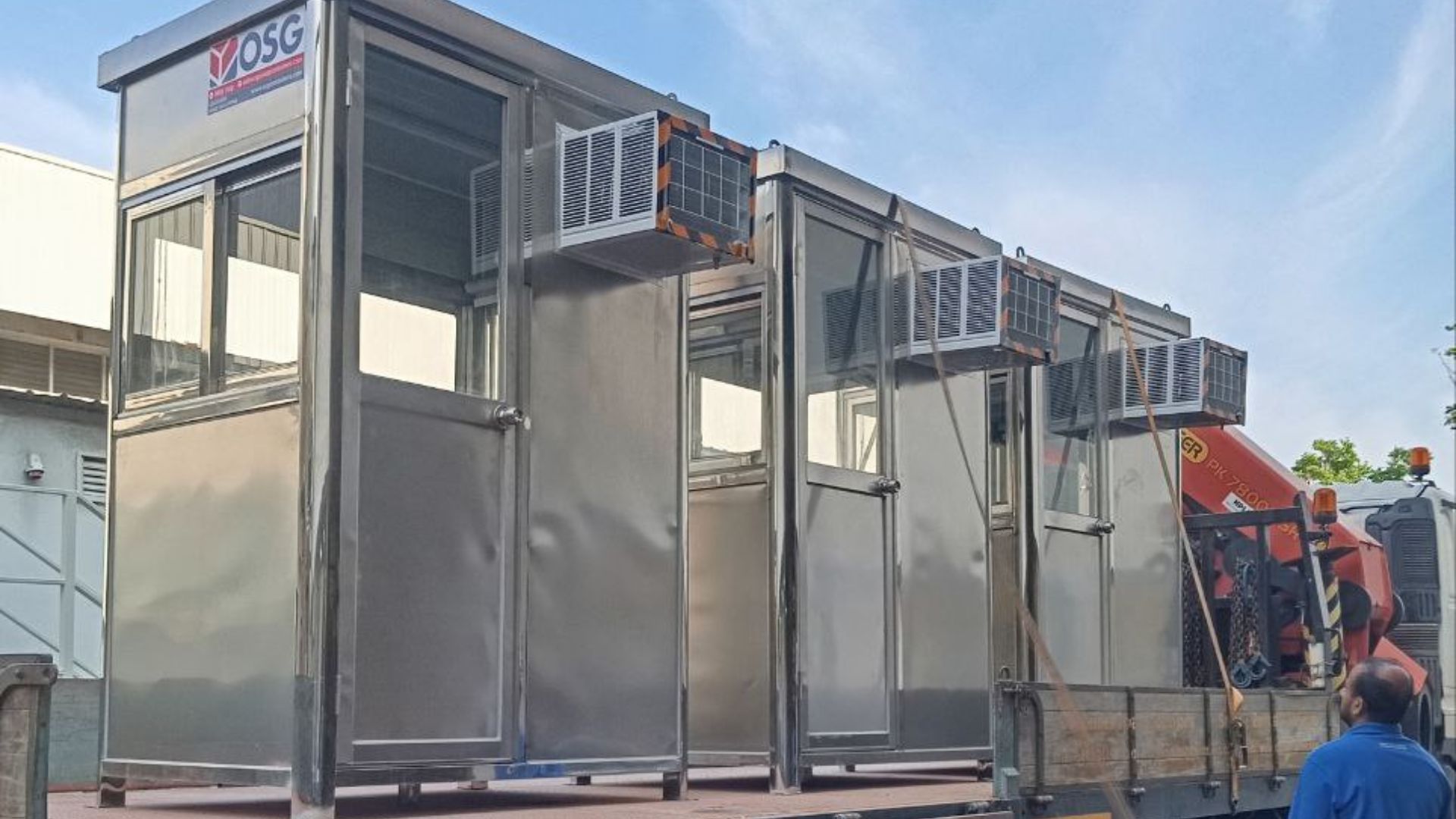
When you need a robust security solution that installs in days rather than months, modular units built from modified shipping containers or heavy-gauge steel frames offer a smarter path forward. These units arrive at your site ready for utility hookups, sparing you the headache of managing subcontractors on your property for weeks on end.
Comparing structural integrity
You need to know that your security booth can withstand rough weather and accidental impacts from delivery trucks. The table below compares the physical traits of traditional brick builds, standard modular units, and heavy-duty steel variants.
| Construction Type | Installation Time | Relocation Capability | Impact Resistance |
|---|---|---|---|
| Traditional Brick | 6 to 12 Weeks | Impossible (Permanent) | High (Masonry) |
| Standard Modular | 1 to 3 Days | Moderate (Crane required) | Moderate (Aluminum/Steel composite) |
| Steel guard house container | 1 Day | High (Forklift or crane ready) | Very High (Corten steel frame) |
Flexibility in placement and relocation
Business needs change. A gate that handles heavy truck traffic today might become a secondary exit tomorrow. A portable unit gives you the freedom to pick up your security post and move it to a different gate or a brand-new facility entirely. This mobility protects your capital investment. If you relocate your operations, your security infrastructure moves right along with your inventory and equipment.
Selecting Between Prefabricated and Custom Built Units
Choosing the right configuration depends entirely on your site's specific traffic volume, local weather conditions, and budget constraints. Off-the-shelf options work wonderfully for standard facility gates, while unique architectural requirements demand a tailored approach.
Installation speed analysis
Time is your most valuable asset when securing a new property boundary. A standard prefab guard house arrives on a flatbed truck, gets unloaded with a crane or heavy forklift, and connects to local power within hours. You avoid the lengthy permitting processes associated with permanent structures because many portable units are classified as equipment rather than real estate. If you are racing against a tight facility opening deadline, off-the-shelf prefabrication is the only way to meet your schedule.
Cost-efficiency breakdown
Custom builds let you pick every exact detail, from bullet-resistant glass ratings to custom exterior cladding that matches your corporate headquarters. However, that personalization comes with a steep price tag and longer lead times. Standardized units offer massive savings through factory-batch manufacturing. We advise most clients to choose a well-equipped standard model unless local zoning laws or extreme security threats force them into a fully custom specification.
Determining the Ideal Layout for Your Security Personnel
A poorly designed interior layout causes daily friction for your team. If an officer has to stand up, walk across the room, and peer around a thick window frame to see an approaching visitor, your access control process slows down immediately.
Visibility and line of sight
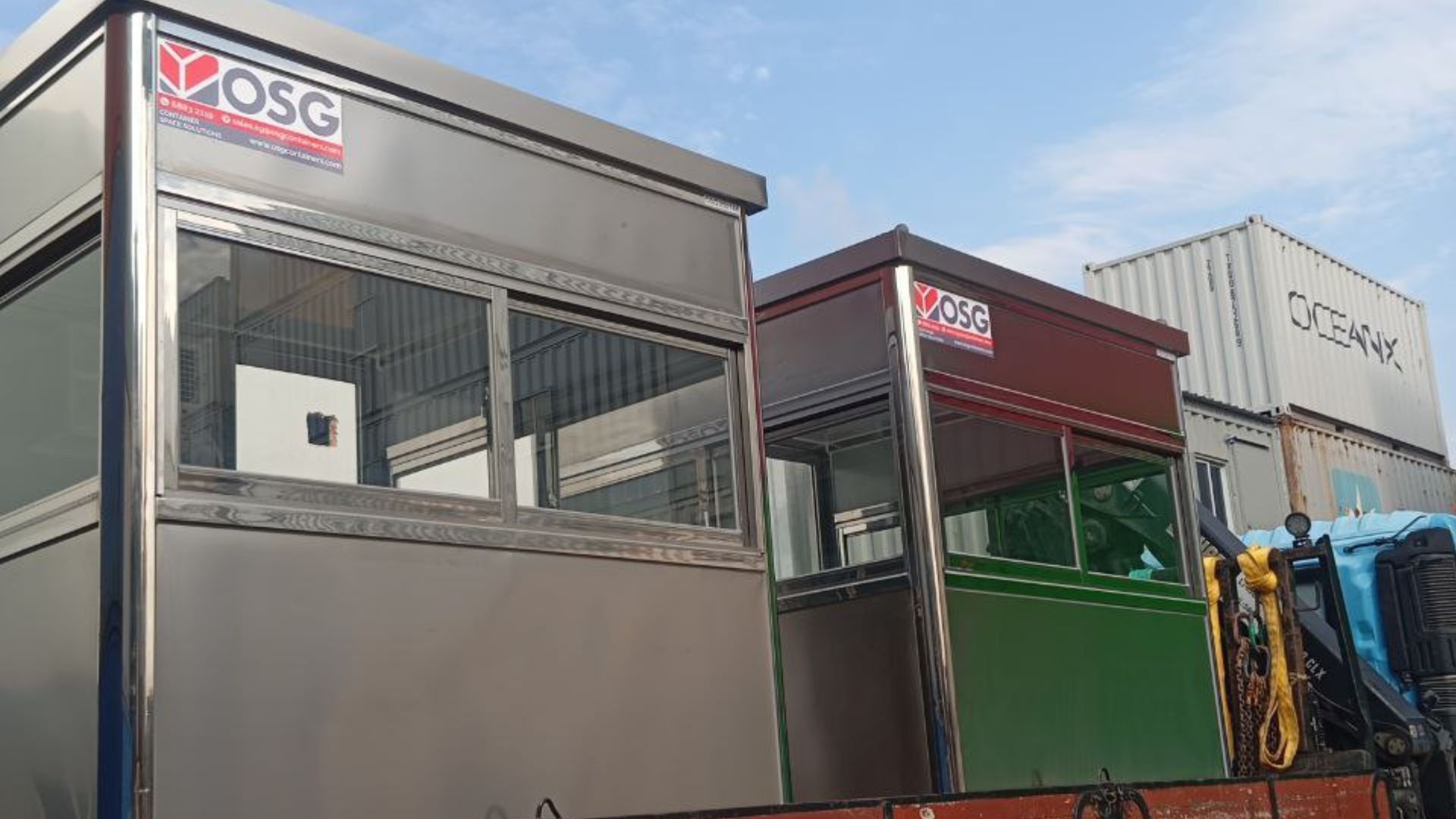
Your officers need a 360-degree view of approaching vehicles, pedestrians, and gate arms. Look for units featuring large tempered glass windows on all four sides. Sloped glass designs are particularly effective because they eliminate interior glare from headlights at night and direct overhead sun reflections away from the officer's eyes.
Climate control and ergonomics
Security work requires long periods of intense focus. Ergonomic layouts make a noticeable difference in shift performance:
- Built-in desktop surfaces sized correctly for monitors, access control software, and visitor logbooks
- Dedicated HVAC units sized precisely for the square footage to prevent hot and cold spots
- Insulated wall panels that absorb exterior traffic noise so officers can hear intercoms clearly
- Strategically placed electrical and data outlets to eliminate tangled extension cords across the floor
Confirming Operational Readiness and Security Efficacy
Before you sign off on your new guard house, you must test every system to ensure it integrates smoothly with your broader facility operations. A shiny new box on a concrete pad does no good if the card readers fail to communicate with your main security server.
Testing integration with existing access systems
Bring your IT and security integrators on-site during the final setup phase. Run these checks before putting the unit into active service:
- Test the hardwired ethernet and Wi-Fi signals to ensure uninterrupted communication with your visitor management database.
- Verify that automatic gate release buttons, intercoms, and CCTV monitors respond instantly without lag.
- Confirm that emergency backup power supplies switch on automatically if the main facility power drops.
- Check all exterior door locks, pass-through transaction drawers, and window security bars for smooth mechanical operation.
Reviewing long-term maintenance outcomes
Protecting your investment requires a simple routine maintenance plan. Inspect exterior paint and rust seals annually, clear roof drainage gutters of leaves and debris, and service the HVAC filters every three months. Steel-framed structures hold up exceptionally well to harsh weather if you address minor paint chips promptly. By keeping up with these basic tasks, you ensure your security investment remains functional, professional, and secure for decades.
Frequently Asked Questions
What is the difference between a guard post and a guard house?
A guard post is typically a minimal shelter, such as an open-air canopy or a standing booth designed for brief protection from the elements. A guard house is a fully enclosed, insulated structure equipped with HVAC, electrical wiring, and communication systems suitable for officers working full, multi-hour shifts.
Are prefab guard houses easily relocatable?
Yes. Most prefabricated units feature built-in lifting fork pockets or crane lifting lugs welded directly to the base frame. You can load them onto a flatbed truck and move them to a new location whenever your facility layout changes.
How long does it take to install a guard house container?
Physical placement usually takes less than a single day once your foundation pad is ready. After the unit is unloaded into position, connecting electrical power and network cables typically takes just a few hours, allowing for immediate operational use.