
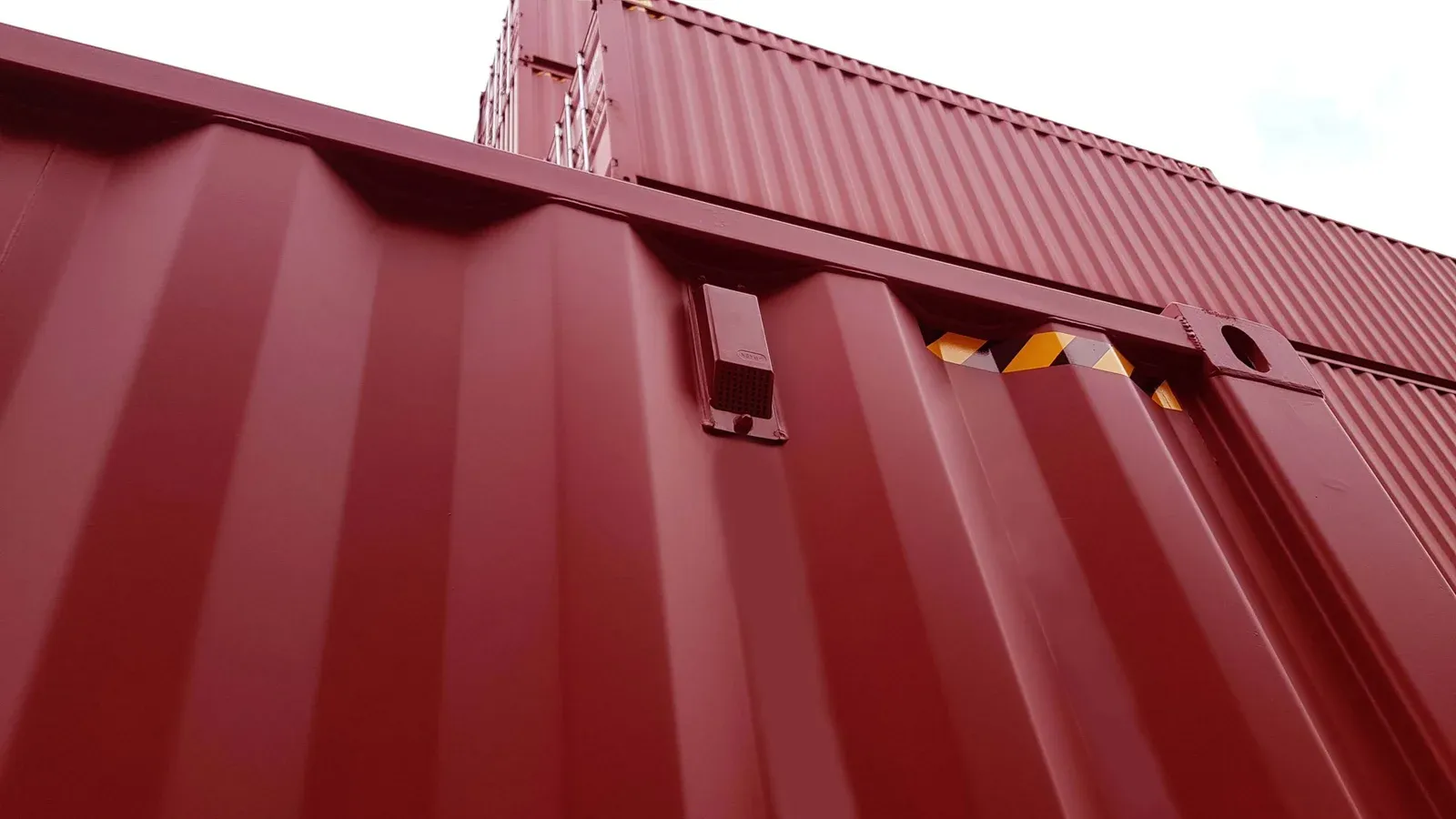
20ft Container: Maximizing Capacity and Efficiency for Global Logistics
A 20ft container is a standardized, intermodal steel unit, approximately 20 feet in length, crucial for global supply chains. Designed for efficient and secure transport across ships, trains, and trucks, it offers a cost-effective solution for diverse cargo. Understanding its precise capacity, dimensions, and loading strategies is key to optimizing international shipping and logistics.
Understanding the Core Role of a 20ft Container in Global Logistics
In the intricate world of global trade, the 20ft container serves as more than just a metal box; it is a standardized, intermodal unit that revolutionized logistics. Its widespread adoption makes cargo transfer seamless across various modes of transport, from ships and trains to trucks. This greatly simplifies international shipping.
What Defines a Standard 20ft Container?
A 20ft container is a standardized steel unit built for the safe and efficient transport of goods. Its main feature is its nominal length of twenty feet. This, along with its consistent width and height, allows for universal stacking and handling. These containers are made to endure harsh marine environments and repeated handling. They ensure cargo protection from where it starts to where it arrives. Each unit has a Container Safety Convention (CSC) plate, which proves its strong structure and suitability for international transport.
Key Benefits of 20ft Containers for Modern Businesses
- Standardization and Interoperability: Their ISO standardization means they can be handled by equipment and infrastructure worldwide. This reduces transfer times and complexity.
- Cost-Effectiveness: For smaller to medium-sized shipments, a 20ft container often provides the most economical solution. It balances capacity with shipping costs compared to larger units or less-than-container-load (LCL) options.
- Security and Protection: Built from strong steel, these containers offer excellent protection against theft, damage, and environmental factors, keeping valuable cargo safe.
- Versatility: They can hold a wide range of goods, from raw materials and manufactured products to consumer electronics. This makes them suitable for many different industries.
- Efficiency in Logistics: The ability to move containers directly from production sites to ports, then to final delivery points, streamlines the supply chain. This reduces transit times and potential delays.
Common Applications of 20ft Containers Across Industries
- Retail and Consumer Goods: Perfect for importing finished products, apparel, electronics, and household items from manufacturing centers to distribution hubs.
- Manufacturing: Used to transport components, raw materials, and machinery parts between factories or to assembly plants globally.
- Agriculture: Suitable for bulk agricultural products, processed foods, and other non-perishable goods. These often require specific ventilation or temperature control modifications.
- Construction: Often repurposed on-site for secure storage of tools, equipment, or materials. They offer a mobile and strong solution.
- Pharmaceuticals: While pharmaceuticals often require specialized refrigerated containers (reefers), standard 20ft units can transport stable medical equipment and supplies.
- Automotive: Used for shipping vehicle parts, engines, and smaller components to assembly lines or repair facilities worldwide.
20ft Shipping Container Specifications: Dimensions, Weight, and Material
To plan logistics well and use cargo space best, businesses must understand the exact specifications of a 20ft shipping container. These details decide what can be shipped, how much, and under what conditions.
Standard Dimensions and Internal Capacity of a 20ft Container
While small differences exist between manufacturers, the dimensions of a 20ft shipping container follow strict ISO standards to ensure global compatibility. Here are the typical external and internal measurements:
- External Dimensions:
- Length: Approximately 6.06 meters (20 feet)
- Width: Approximately 2.44 meters (8 feet)
- Height: Approximately 2.59 meters (8 feet 6 inches)
- Internal Dimensions:
- Length: Approximately 5.90 meters (19 feet 4 inches)
- Width: Approximately 2.35 meters (7 feet 8 inches)
- Height: Approximately 2.39 meters (7 feet 10 inches)
- Internal Capacity:
- Volume: Approximately 33.2 cubic meters (1,172 cubic feet)
These internal dimensions are vital for determining how many items, such as pallets or boxes, can fit inside. Account for the slight reduction in space caused by internal structural elements and the door opening mechanism.
Weight Limitations and Payload Considerations for a 20ft Container
Knowing the weight limits of a 20ft shipping container is extremely important for safety, regulations, and managing costs. There are three key weight specifications:
- Tare Weight: This is the weight of the empty container itself. For a standard 20ft container, the tare weight is typically around 2,200 kg (4,850 lbs).
- Maximum Gross Weight: This is the maximum allowable weight of the container and its cargo together. For a 20ft unit, this typically ranges up to 24,000 kg (52,910 lbs). Going over this limit is unsafe and against the law.
- Payload Capacity: This is the maximum weight of cargo that can be loaded into the container. It is found by subtracting the tare weight from the maximum gross weight. So, the payload capacity for a 20ft container is about 21,800 kg (48,060 lbs).
When loading, it is vital to spread weight evenly. This helps keep the container stable and prevents damage during transit. Overloading or uneven loading can lead to serious safety hazards, fines, and potential harm to the cargo or the container itself.
Material Composition and Structural Integrity of 20ft Containers
The strong build of shipping containers is a key reason for their durability and longevity. A standard 20ft shipping container is mainly made from:
- CORTEN Steel (Corrosion-Resistant Steel): This high-strength, low-alloy steel makes up the walls, roof, and doors. CORTEN steel is designed to resist rust by forming a protective layer of rust on its surface, which stops further damage.
- Corner Castings: These heavy-duty steel parts are at all eight corners of the container. They are essential for lifting, stacking, and securing the container during transport and handling.
- Frame: The skeletal structure of the container, including the cross members, top and bottom side rails, and end frames, provides stiffness and strength.
- Flooring: Typically made from marine-grade plywood, often laminated with bamboo or other strong wood. It is treated to resist moisture and pests. This flooring is built to withstand heavy loads and the impact of forklifts.
- Doors: Double doors at one end come with heavy-duty hinges and strong locking bars. They ensure the security of the cargo and provide a watertight seal.
Regular maintenance and structural integrity checks are vital. This is especially true for containers used in harsh shipping environments, to ensure they remain cargo-worthy throughout their service life.
Ensuring Compliance: ISO Standards for 20ft Shipping Containers
The global shipping industry relies heavily on standardization for efficiency and safety. ISO standards compliance for shipping containers is not just a formality; it is a basic requirement for any container used in international trade.
The Critical Importance of ISO Certification for 20ft Containers
ISO (International Organization for Standardization) certification for shipping containers provides a universal language and framework that guides their design, construction, and testing. This certification is critical for several reasons:
- Safety: ISO standards ensure that containers are built to specific strength and durability needs. This reduces the risk of structural failure, cargo damage, and accidents during handling, stacking, and transport.
- Legal Compliance: Most countries and international regulations require containers to meet ISO standards so they can enter and move through their borders. Containers that do not follow these rules can face delays, penalties, or be refused shipment.
- Quality Assurance: Certification means a container has been made and tested according to strict international rules. This assures users of its quality and fitness for its purpose.
- Insurance: Shipping insurance providers often ask for proof of ISO compliance to cover cargo, as it lowers risks associated with substandard equipment.
Ensuring Global Interoperability and Safety with ISO Standards
One of the main successes of ISO standards is the creation of globally interchangeable containers. This means a container made in one part of the world can be easily loaded onto a ship, train, or truck anywhere else, using standardized equipment. This interchangeability leads to:
- Efficient Handling: Cranes, forklifts, and other port equipment are made to handle ISO-standard containers. This allows for fast and efficient loading and unloading.
- Stackability: Containers are designed to be stacked safely, both on land and at sea. This maximizes space use and ensures stability during transit.
- Standardized Documentation: The consistent size and identification of ISO containers make customs procedures and administrative tasks simpler worldwide.
Beyond interchangeability, ISO standards are key for safety. They set requirements for corner castings, door security, structural strength against various forces (stacking, racking, compression), and resistance to weather. All of these help protect both the cargo and the people handling the containers.
Overview of Relevant ISO Standards for 20ft Containers
Several key ISO standards govern shipping containers:
- ISO 668: Defines the classification, dimensions, and ratings of series 1 freight containers. This is the basic standard that sets the external dimensions (like the 20ft length, 8ft width, and 8ft 6in height) and the gross weight capacities.
- ISO 1496: Specifies the general purpose and specific purpose freight containers of series 1. This series of standards details the design, testing, and structural requirements for various container types (e.g., dry van, refrigerated, open-top). For example, ISO 1496-1 covers general cargo containers.
- ISO 6346: Establishes the coding, identification, and marking of containers. This standard requires the unique alphanumeric identifier (e.g., ABCU 123456 7) found on every container. This includes the owner code, equipment identifier, serial number, and check digit. This is crucial for tracking and management.
For any business involved in containerized shipping, ensuring their chosen containers comply with these ISO standards is not merely advisable, but mandatory for successful and compliant international trade.
Dry Van in Singapore: Essential for Local Logistics and Storage
For businesses working within or through Singapore, understanding the role and availability of a dry van in Singapore is vital for smooth local and regional logistics. Dry vans are the most common type of shipping container, suitable for many kinds of goods.
Characteristics and Uses of a Standard Dry Van
- Enclosed and Weatherproof: Designed to protect cargo from outside elements like rain, dust, and sea spray.
- Non-Refrigerated: It does not have temperature control, making it suitable for goods that do not need specific climate conditions.
- Standardized Construction: Built from durable CORTEN steel with marine-grade plywood flooring. It follows ISO standards for global interchangeability.
- Versatile Access: Usually has strong double doors at one end, allowing for efficient loading and unloading.
The main use of a dry van is for transporting non-perishable goods, such as:
- Packaged consumer goods
- Electronics and machinery parts
- Textiles and apparel
- Furniture and household items
- Dry bulk cargo (e.g., grains, powders in bags)
Availability and Common Applications of Dry Vans in Singapore's Market
Given Singapore's status as a major global trade hub, dry vans are plentiful and widely available across the island for various logistical needs. Their uses in Singapore's market are diverse:
- International Shipping: They are the main way for importing and exporting general cargo through PSA Singapore, one of the world's busiest transshipment ports.
- Local Distribution and Storage: Businesses often use dry vans for moving goods within the island, from ports to warehouses, distribution centers, and retail stores.
- Temporary and Long-Term Storage: Because of their strong and secure design, dry vans are often repurposed as on-site storage units for businesses, construction sites, or even personal items. They offer a cost-effective alternative to traditional warehousing.
- Logistics Hub Operations: They are key to the work of freight forwarders, third-party logistics (3PL) providers, and supply chain managers who consolidate or deconsolidate cargo in Singapore for further shipment.
The high availability and standard nature of dry vans make them a flexible solution for both international and local logistics needs in Singapore.
Selecting the Right Dry Van Provider for Singapore Local Logistics
Choosing a suitable dry van provider in Singapore is crucial for smooth and dependable logistics operations. Key considerations include:
- Fleet Size and Availability: Make sure the provider has enough 20ft (and other sizes) dry vans ready to meet your peak and off-peak needs.
- Maintenance and Quality: Ask about the maintenance schedule and quality of their container fleet. You want containers that are cargo-worthy, wind and watertight, and free from major structural damage.
- Geographic Reach and Local Knowledge: A provider with deep knowledge of Singapore's road network, port operations, and local regulations can ensure timely deliveries and avoid common problems.
- Pricing Structure: Compare rental or purchase prices, delivery fees, and any possible demurrage or detention charges. Look for clear pricing without hidden costs.
- Customer Service and Support: Good communication, quick support, and clear ways to resolve disputes are very helpful, especially when shipments are time-sensitive.
- Additional Services: Some providers offer extra services like container modification, tracking, or customs clearance help, which might be useful.
By carefully considering these factors, businesses can find a dry van provider that fits their logistical needs and optimizes their supply chain efficiency in Singapore.
Strategic Shipping with a 20ft Singapore Shipping Container
Singapore's role as a global maritime hub means that strategic management of a Singapore shipping container is essential. Navigating its busy port operations, complex regulations, and opportunities for cost optimization is key to successful shipments.
Key Considerations for 20ft Container Operations in Singaporean Ports
PSA Singapore is one of the world's leading port operators, known for its efficiency and advanced facilities. When shipping through Singapore, consider the following:
- Connectivity: Singapore offers unmatched connections to over 600 ports worldwide, with frequent ship departures. This wide network provides flexibility in choosing shipping routes and carriers.
- Efficiency and Turnaround Times: PSA Singapore's highly automated terminals and advanced logistics systems ensure fast ship turnaround and efficient container handling. This can minimize transit times and reduce demurrage costs.
- Transshipment Hub: A large part of cargo handled in Singapore is transshipped. Knowing if your cargo is direct or involves transshipment is important for planning and tracking.
- Gate Hours and Booking Systems: Familiarize yourself with the port's operating hours and any electronic booking or appointment systems for trucks entering and leaving to avoid delays.
- Storage and Stacking Capabilities: The port has huge container yards, but knowing the typical free storage periods and extra costs for going over them is essential.
Regulatory Compliance and Customs Procedures for Singapore Shipments
Singapore Customs enforces strict regulations to ensure the security and integrity of its trade flows. Following these procedures is mandatory for the smooth passage of shipments involving a Singapore shipping container:
- TradeNet System: All import, export, and transshipment declarations in Singapore go through the online TradeNet system. Businesses or their chosen agents must send accurate declarations electronically.
- Permits and Licenses: Depending on the type of goods, specific permits or licenses may be needed from relevant government agencies before import or export. It is crucial to identify and secure these ahead of time.
- Customs Duties and GST: While Singapore is a free port with many duty-free imports, Goods and Services Tax (GST) is generally charged on imports. Understanding the applicable tariffs and tax rates is vital for cost planning.
- Controlled and Prohibited Goods: Be aware of Singapore's list of controlled goods (which need specific licenses) and prohibited goods (not allowed entry). Strict penalties apply for non-compliance with these regulations.
- Documentation Accuracy: Exact and complete documents, including bills of lading, commercial invoices, packing lists, and origin certificates, are critical to avoid customs delays and fines.
Working with experienced freight forwarders or customs brokers in Singapore can greatly simplify these complex procedures.
Optimizing Routes and Cost Efficiency for Singapore-Bound 20ft Shipments
Achieving optimal cost efficiency while maintaining reliability is a constant goal for businesses shipping to or from Singapore. Strategies include:
- Carrier Selection: Evaluate different shipping lines based on their service routes, transit times, reliability, and freight rates for your specific trade lane. Some carriers may offer direct services, while others rely on transshipment.
- Cargo Consolidation: For smaller shipments, consider combining goods with other cargo (LCL - Less than Container Load) to fill a 20ft container. This can be more cost-effective than shipping a partially empty container.
- Negotiate Favorable Terms: Leverage relationships with carriers and logistics providers to get better rates, especially for consistent volume or long-term contracts.
- Avoid Demurrage and Detention: Plan carefully to ensure timely cargo pick-up at the port (demurrage) and prompt return of the empty container (detention). These charges can accrue rapidly if deadlines are not met.
- Optimized Routing: Beyond direct port-to-port routes, consider multimodal transport options that might offer a balance of speed and cost-effectiveness, especially for inland destinations beyond Singapore.
- Insurance: While an added cost, cargo insurance can reduce financial risks from unexpected events during transit. This prevents potentially much larger losses.
Strategic planning, along with a deep understanding of Singapore's logistics system, will greatly enhance the efficiency and cost-effectiveness of your container shipments.
Maximizing Load Efficiency: Pallets and Cubic Meters in a 20ft Container
Efficient loading is critical for optimizing freight costs and ensuring cargo safety. Knowing how to best use the space within a 20ft container, especially regarding pallets and cubic meters, is a skill that directly affects a business's profit.
Calculating Pallet Capacity for Optimal Loading in a 20ft Container
The internal dimensions of a 20ft container are approximately 5.90m (length) x 2.35m (width) x 2.39m (height). The number of pallets that can fit depends on their size and how they are loaded. Two common pallet types are the Euro Pallet and the US Standard (GMA) Pallet.
| Pallet Type | Dimensions (L x W) | Approximate Number in a 20ft Container (Single Layer) | Optimal Loading Strategy Considerations |
|---|---|---|---|
| Euro Pallet (EUR1) | 120 cm x 80 cm (47.2 in x 31.5 in) | 10-11 |
|
| US Standard Pallet (GMA) | 121.9 cm x 101.6 cm (48 in x 40 in) | 10 |
|
These figures assume a single layer. Stacking pallets can greatly increase capacity, if the cargo and packaging can bear the weight, and the container's internal height allows it without risking safety or cargo integrity.
Understanding Cubic Meter (CBM) Volume for 20ft Container Shipments
Cubic meter (CBM) is a standard unit for measuring shipment volume. It is calculated by multiplying the length, width, and height of a package or the total cargo. The total internal cubic capacity of a standard 20ft container is approximately 33.2 cubic meters.
Understanding CBM is crucial for:
- Freight Cost Calculation: Many freight charges are based on either weight or volume (CBM). Whichever gives a higher cost is used (known as volumetric weight or chargeable weight).
- Space Optimization: Knowing your cargo's CBM helps you determine its space requirements. It also helps you decide if a 20ft container is the right size, or if you need to consider an LCL shipment.
- Load Planning: Accurate CBM calculations allow for precise planning of how to arrange cargo to use the container's internal volume best, minimizing wasted space.
Always calculate the CBM of individual packages and the total CBM of your shipment before planning container loading. This ensures efficient space use and accurate cost estimates.
Best Practices for Efficient 20ft Container Loading and Space Utilization
To achieve maximum efficiency and cargo protection, follow these best practices for loading a 20ft container:
- Plan Your Load: Before starting, create a loading plan or drawing. Think about the size and weight of each package, the order of loading, and how to spread the weight.
- Heavy Items First and Low: Always load heavier items at the bottom and towards the front (door side for stability during transport). This lowers the center of gravity and prevents lighter items from being crushed.
- Weight Distribution: Spread weight evenly across the container floor. This prevents stress on specific points and keeps the container balanced, which is vital for safety during transit.
- Fill Gaps and Secure Cargo: Use dunnage materials (airbags, wooden blocks, straps, netting) to fill any empty spaces between packages. This prevents cargo movement during transport. Moving cargo can damage the goods or the container itself.
- Maximize Vertical Space: Stack items when possible. Make sure the items at the bottom can bear the weight of those above them. Leave a small gap (e.g., 5-10 cm) between the top of the cargo and the container roof for air flow and to avoid damage from container flexing.
- Consider Door Clearance: Ensure cargo is not loaded directly against the doors. This allows for easy opening and prevents cargo from falling out when the doors are opened.
- Label Clearly: Label all packages clearly with handling instructions (e.g.,